

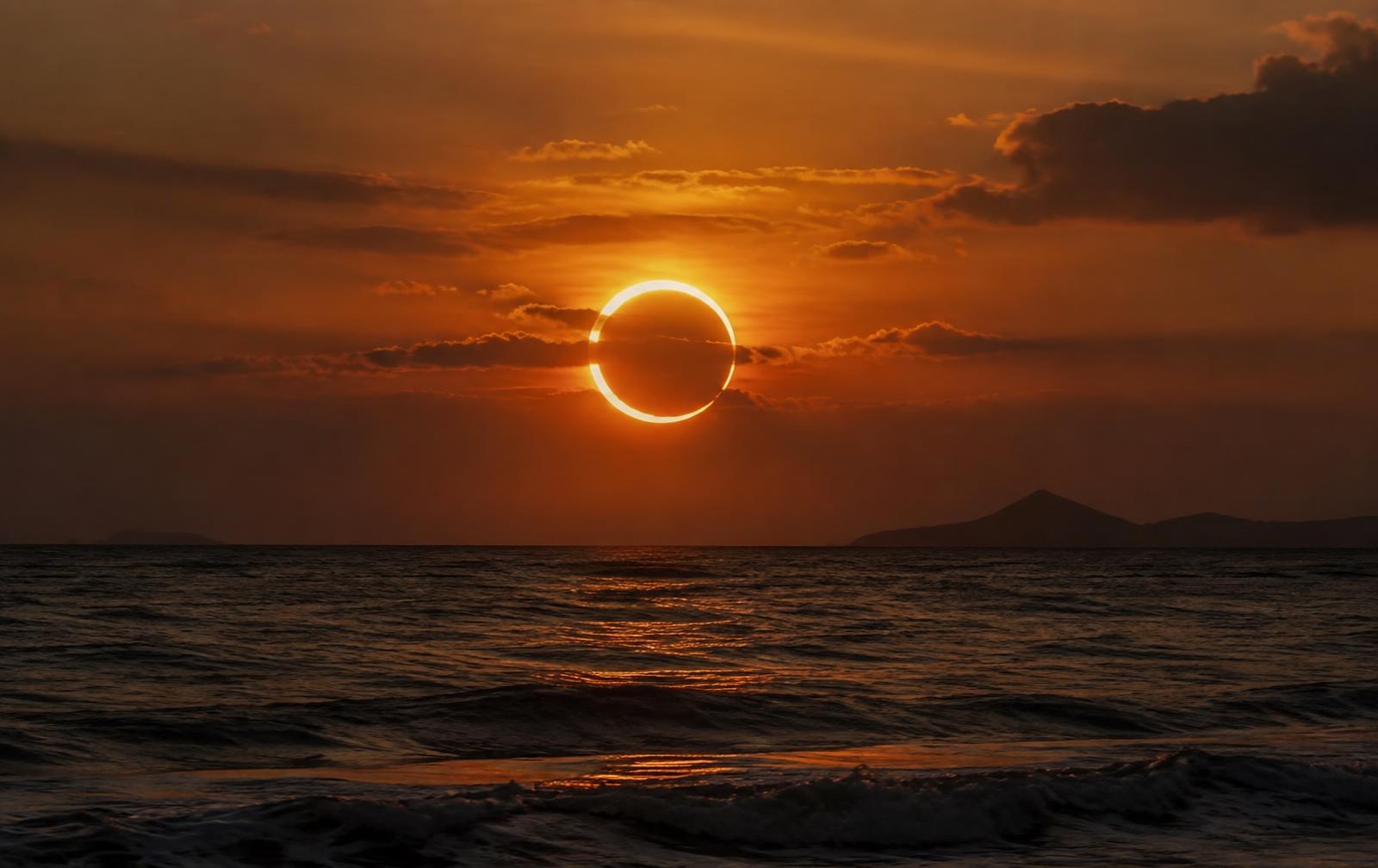
Annular Solar Eclipse
Galápagos · South America · Atlantic · Iberia
Start thinking about this
In 15 months
Why this matters
The annular path crosses the eastern Pacific, northern South America, the Atlantic and ends near the Iberian Peninsula at sunset.
Few annular paths reach both South America and Europe in one day, which makes the choice of viewing location unusually wide.
How rare is it?
- Rarity classification
- RARE
- Recurrence
- Annular eclipses occur somewhere on Earth every one to two years; the path rarely repeats over the same location.
When
26 January 2028
Global maximum around 15:08 UTC — timing at your viewing location may differ.
Calculated annular eclipse path
Gold: calculated zone where the annular phase is possible.
Orange: our cautious 3 km planning buffer on both sides of the calculated edge — not an additional NASA prediction.
Certified solar eye protection is required throughout an annular eclipse, including inside the path.
The highlighted zone is based on NASA's calculated path for this date. NASA's official map also shows the limit lines and centreline.
Open NASA's official path mapEclipse Predictions by Fred Espenak, NASA's GSFC
Planning timeline
8 months before
Decide whether you want to travel into the narrow path.
4 months before
Compare locations inside the path and book travel.
1 month before
Get certified solar viewers — the Sun is never fully covered.
7 days before
Watch the forecast and keep a backup location in mind.
Prepare
Certified eclipse glasses
During an annular eclipse, the Sun is never fully covered. Use ISO 12312-2 eclipse glasses or a safe solar viewer whenever looking directly at it.
Solar filter for cameras and telescopes
Any optical instrument pointed at the Sun needs a dedicated front-mounted solar filter.